High Precision
Sphere, cylinder and axis resolved to 0.01 D with automatic vertex compensation, so the subjective refraction starts from a reliable number.

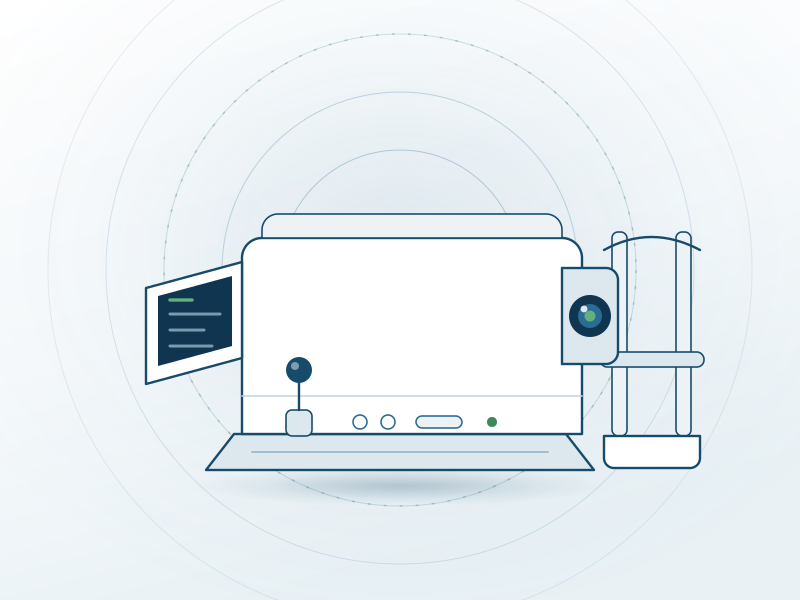
Diagnostic Model AR-800
A fast, repeatable objective refraction for practices that measure a lot of eyes. Sphere, cylinder, axis and corneal curvature are captured in one seated measurement, giving the optometrist a dependable starting point before subjective refinement begins.
Price on request. Every unit is delivered, installed and calibrated on your site by a CUMEDIX engineer, with operator training for your team included.
Product Highlights
Four things that decide whether an auto refractometer earns its place in a busy room.
Sphere, cylinder and axis resolved to 0.01 D with automatic vertex compensation, so the subjective refraction starts from a reliable number.
Auto-tracking and auto-shot mean one operator can seat the patient, align and capture without moving round the instrument.
A high-resolution mire image with real-time focus feedback makes small media opacities obvious before you take the reading.
Built for high-throughput screening clinics, with a sealed optical path and a serviceable modular chassis.
Product Overview
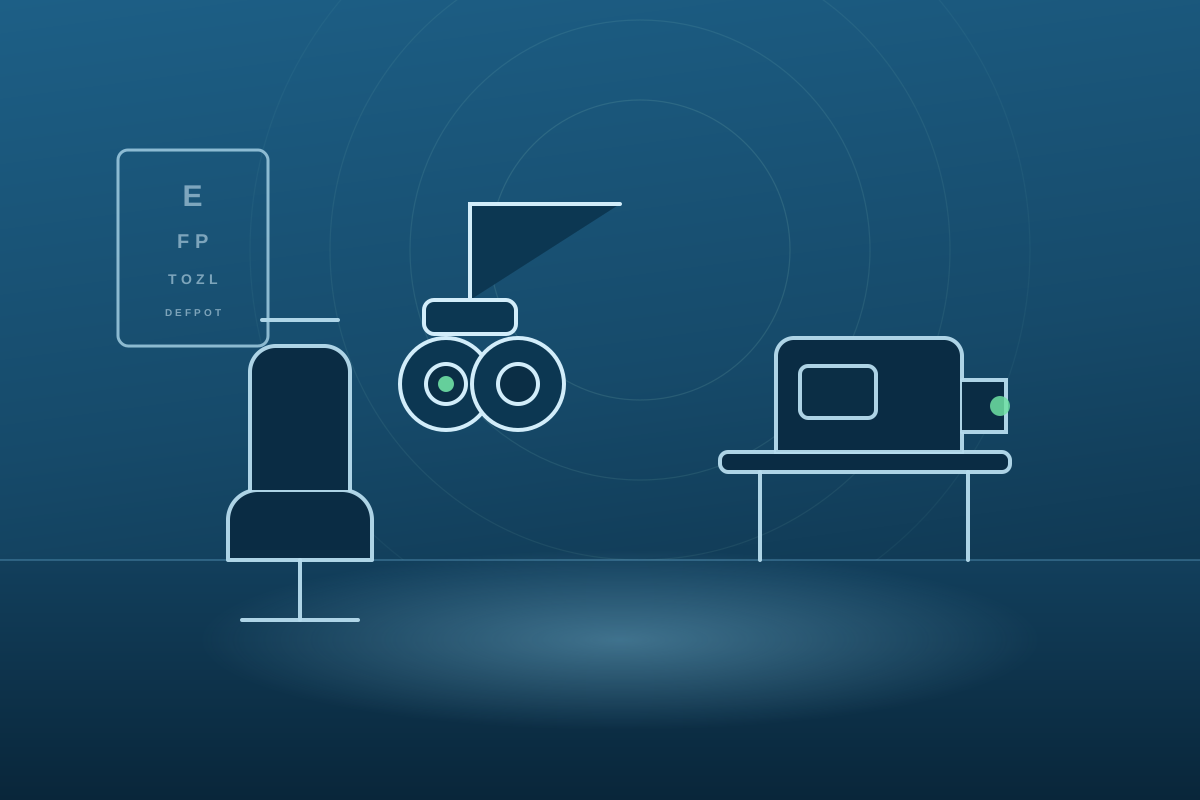
The AR-800 is the instrument we put in front of most practices, because it does the one job well and keeps doing it under load.
Objective refraction is only useful if it is repeatable. The AR-800 uses a rotary prism measurement over a sealed optical path, so readings hold their accuracy through a full clinic day and across the temperature swings a Nepali consulting room actually sees. Auto-tracking follows the pupil and the instrument fires only when alignment and focus are both in tolerance, which takes operator technique out of the result.
Keratometry runs in the same measurement, so contact lens work and pre-surgical assessment do not need a second instrument or a second patient transfer. Results print on a slip and transfer over RS-232 or USB to a phoropter, a lensmeter or your practice software.
Key Features
Six capabilities that change how the room runs, not just how the brochure reads.
Corneal curvature measured in the same seated position — no second instrument and no second patient transfer.
The head tracks the pupil and fires when alignment and focus are both within tolerance, removing operator variance.
Pupil diameter and vertex distance recorded alongside every reading and carried into the printout.
A full result slip prints in under three seconds, including both eyes, keratometry and PD.
RS-232 and USB output to phoropters, lensmeters and practice management software.
Modular optical block and accessible calibration points keep a service visit short and a spare parts list simple.
Specifications
Everything you need for a tender document or a budget submission.
| Specification | Detail |
|---|---|
| Technology | Rotary prism auto refraction with Placido-ring keratometry |
| Measurement Range | Sphere ±25.00 D · Cylinder ±10.00 D · Axis 0–180° |
| Measurement Increment | 0.01 / 0.12 / 0.25 D, operator selectable |
| Keratometry | Radius 5.0–10.2 mm · Corneal power 33.0–67.5 D |
| Pupil Diameter | 2.0–8.5 mm, measured to 0.1 mm |
| Minimum Pupil | 2.0 mm |
| Display | 8.5" colour TFT touchscreen, 90° tilt |
| Connectivity | RS-232C · USB 2.0 · optional network module |
| Printer | Built-in thermal printer, 58 mm roll |
| Power Supply | 100–240 V AC, 50/60 Hz, 60 VA |
| Dimensions | 285 (W) × 505 (D) × 460 (H) mm |
| Weight | 17 kg |
| Warranty | 1 year parts and labour, extendable to 3 years |
Scroll the table sideways to see the full specification.
Specifications are indicative and may be revised by the manufacturer. Ask us for the current datasheet before you finalise a tender document.
Applications
The four settings we most often install the AR-800 into.
01
Front-of-house screening for outpatient departments, where a fast objective starting point keeps refraction queues moving.
02
A credible in-store refraction that supports dispensing decisions and shortens the time a customer spends in the chair.
03
Portable enough for outreach work, with a printed slip per patient that travels back with the records.
04
Consistent, repeatable readings make it a useful reference instrument when students are learning subjective technique.
Related Equipment
What practices most often specify in the same room.
Diagnostic
Automatic non-contact IOP measurement with a soft-puff mode that keeps first-visit patients comfortable.

Laboratory
Automatic reading of single vision, bifocal and progressive lenses, with UV transmission measurement.
Examination
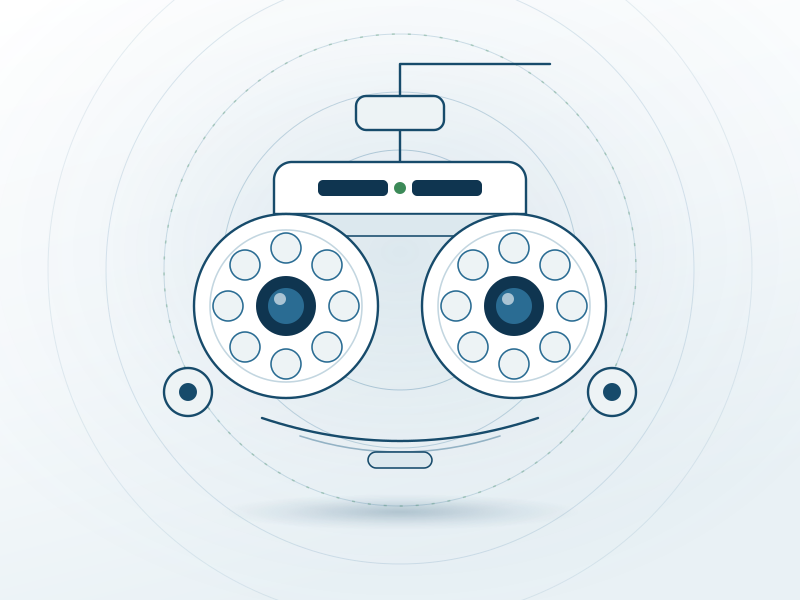
Full-range subjective refraction head with smooth detented discs and a complete auxiliary lens set.
Tell us your patient volume and room layout and we will confirm the configuration, the delivered price and a realistic installation date — including training for your team.